Accessible Oral Care for Bedridden People

Accessible Oral Care for Bedridden People

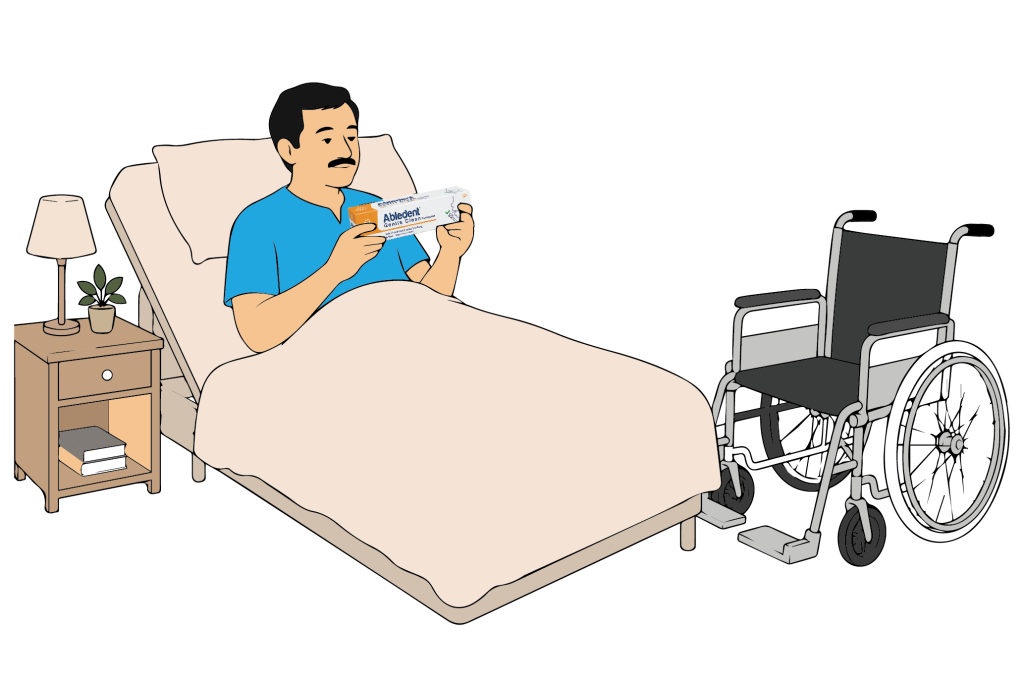
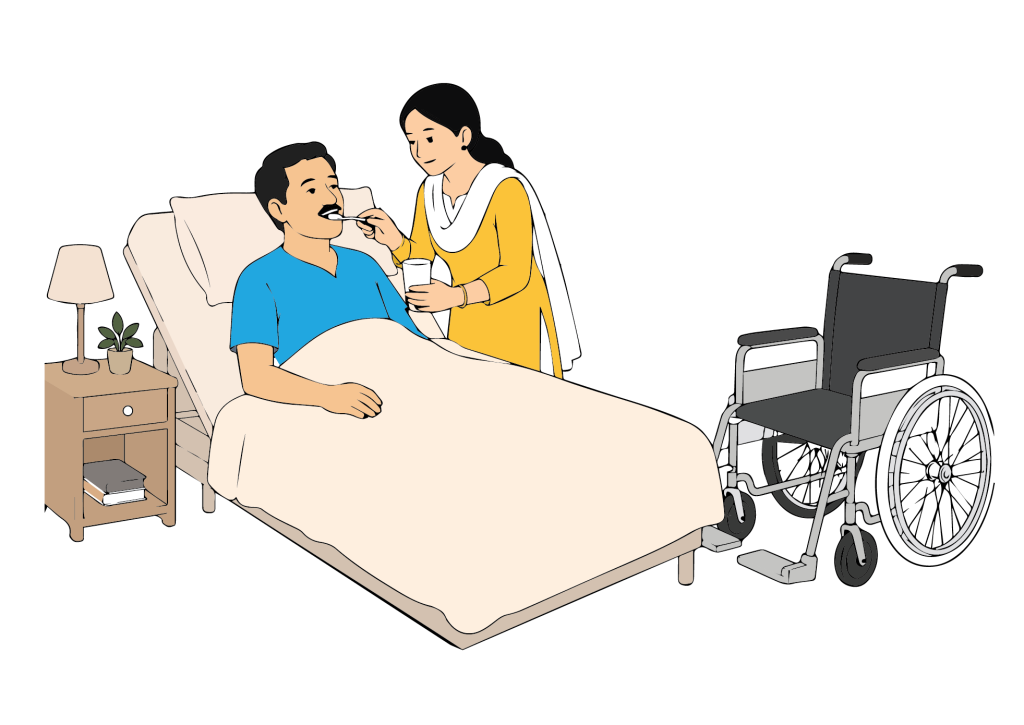
Being bedridden should not mean losing access to safe, comfortable daily oral care. Abledent makes oral hygiene possible even without brushing, rinsing, or sitting upright.

Being bedridden should not mean losing access to safe, comfortable daily oral care. Abledent makes oral hygiene possible even without brushing, rinsing, or sitting upright.

01

Infection Risk

A neglected mouth in bedridden people is one of the leading causes of life-threatening lung infections like pneumonia.

02

Bloodstream Bacteria

Untreated plaque and gum disease can let harmful oral bacteria enter the bloodstream.

03

Daily Oral Discomfort

Dry mouth, oral pain, and bad breath are among the most common and distressing experiences for bedridden patients.

04

Rapid Bacterial Buildup

Immobility, reduced saliva, and mouth-breathing increase bacterial buildup faster than in non-bedridden individuals.
CHALLENGES

Why Oral Care Becomes So Difficult for People who are Bedridden

Bedridden people face oral care challenges that standard products simply weren’t designed for.

Cannot Spit or Rinse

Most toothpastes are designed to be rinsed and spat out. For people who cannot spit or rinse easily, the foam can feel uncomfortable and may trigger gagging or increase the risk of aspiration.

Limited Mobility & Cooperation

Bedridden people may be unable to hold a toothbrush, open their mouth, or participate in their own oral care routine.

Caregiver-Assisted Oral Care

When someone relies on a caregiver for oral hygiene, oral care products need to be easy to use and comfortable during assisted brushing.

Difficult Patient Positioning

Helping someone brush their teeth while they’re lying down requires extra care and a different technique.
SOLUTIONS

What to Look for in Oral Care Products for Bedridden Patients

The right products can make assisted oral care more practical, comfortable, and easier to carry out consistently.

Swallow-Safe & No-Rinse Formulas

Mouthwash category icon

Non-Foaming Toothpaste

Wipes for Assisted Care

GET STARTED TODAY

Find Your Community in Oral Care

Caring for a bedridden patient can feel isolating. This space brings caregivers together to exchange support, guidance, and everyday experiences that often go unspoken.

Questions Caregivers Commonly Ask

How do you clean the mouth of a bedridden patient?

Turn the patient slightly to one side to reduce the risk of aspiration. Use a soft toothbrush or oral care wipe to gently clean teeth, gums, and tongue. No rinsing or spitting is required if you use a swallow-safe, no-rinse toothpaste or disposable wipes.

Is it safe to use toothpaste if the patient cannot spit?

Standard toothpastes are not designed to be swallowed, which can make them unsuitable for patients who cannot spit. Look for oral care products made with food-listed ingredients, free from fluoride and SLS, and specifically formulated to be safer if swallowed. Abledent Gentle Clean Toothpaste uses Xylitol and Calcium Carbonate as its primary cleaning agents.

How often should a bedridden patient's teeth be cleaned?

At least twice a day, ideally after meals. For high-risk patients, such as those in the ICU or on long-term medication, consistent oral care is clinically essential. Within 48 hours of hospitalisation, plaque can begin accumulating harmful bacteria, so consistency matters as much as technique.

Can oral wipes replace brushing for bedridden patients?

When brushing is not possible, oral care wipes are a sound alternative. Abledent’s oral care wipes clean teeth, gums, and tongue without water, rinsing, or spitting. For general daily care, Abledent Gentle Clean wipes with Xylitol offer gentle cavity fighting action, while Abledent Active Clean wipes with Chlorhexidine are a stronger alternative.
What is the best toothpaste for bedridden patients?

The best toothpaste for a bedridden patient is one that is swallow-safe, non-foaming, and does not require rinsing. Abledent Gentle Clean toothpaste is specifically formulated for assisted oral care, using food-listed ingredients and a fluoride-free, SLS-free formula.