Oral Care for Adults with Dementia & Alzheimer’s
Memory loss can slowly change the way everyday oral care routines are understood and practised. Abledent is here to make that daily task a little less difficult, a little less distressing, and a lot more manageable.
Why the Mouth Is One of the First Things to Suffer in Dementia
Source:
National Institute on Aging – Large study links gum disease with dementia
British Dental Journal – Evidence summary: the relationship between oral health and dementia
01
Overlooked Oral Health
02
Cognitive Decline Link
03
Infection Risk
04
Unnoticed Oral Pain
Why Brushing Can Feel Distressing for People with Dementia or Alzheimer’s
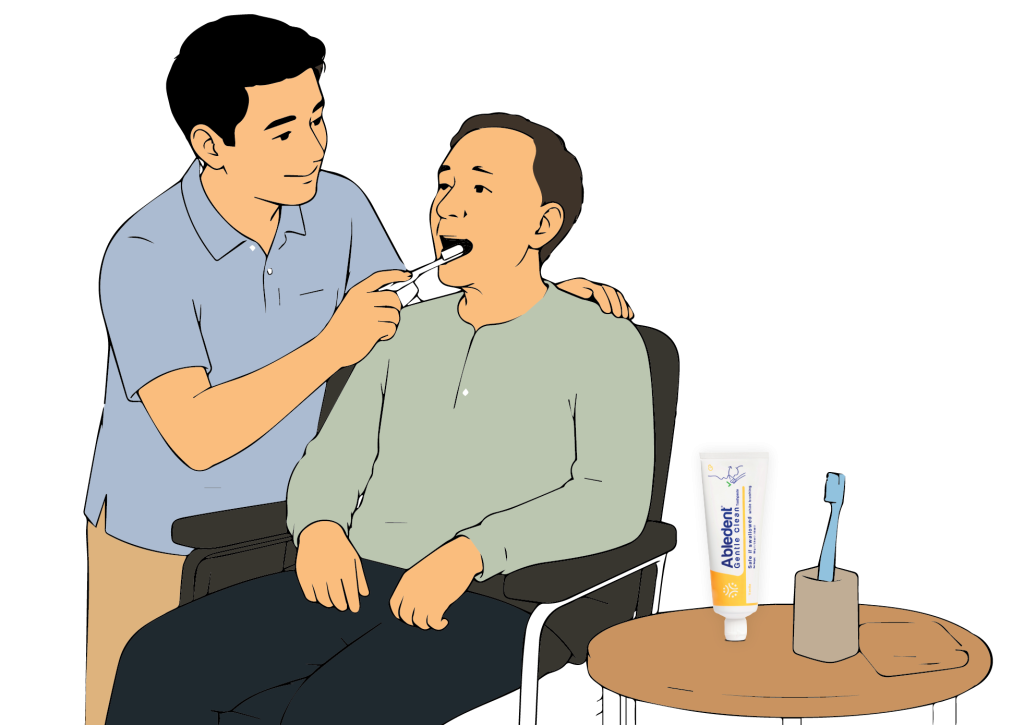
Resistance, confusion, and fear can make even simple oral care feel overwhelming for people with dementia and Alzheimer’s. Here are some common challenges they face
They No Longer Recognise the Routine
Resistance & Refusal
Cannot Spit or Rinse Safely
Pain That Goes Unspoken
What to Look for in Oral Care Products for Dementia Patients
Simpler products, fewer steps, and gentler formulas can make the biggest difference for both caregivers and patients.
Safe-if-swallowed & No-Rinse Formulas
Remineralising & Enamel-Strengthening Formulas
Mild, Familiar Flavours
Wipes for Difficult Days
Recommended Abledent Products
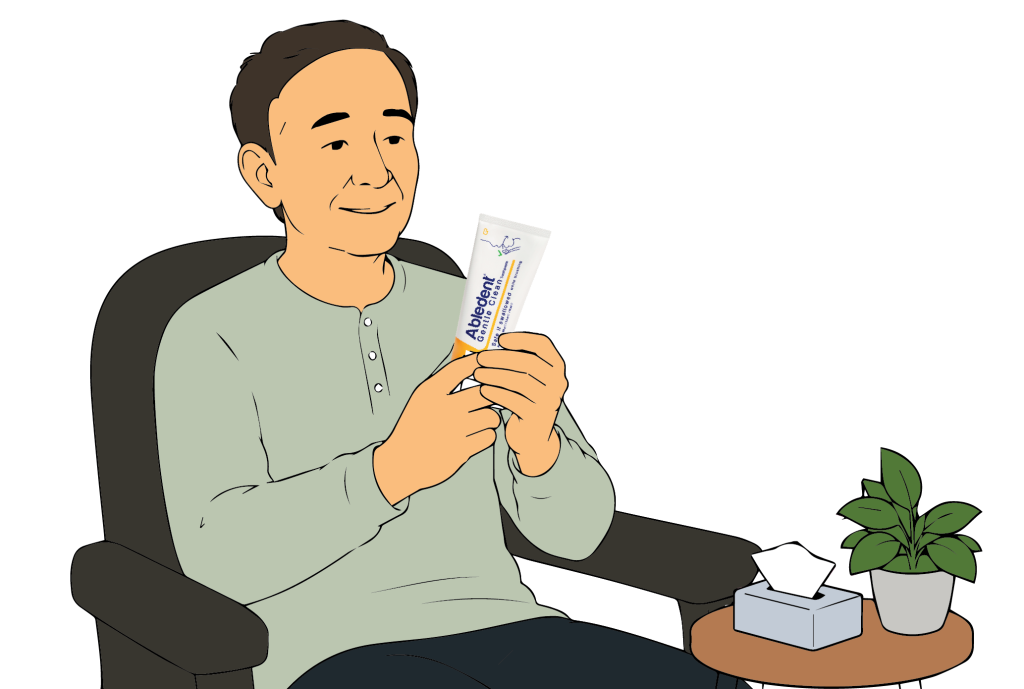
Abledent Gentle Clean Toothpaste
Abledent Gentle Clean Wipes
Abledent Calcium Toothpaste
Find Your Community in Oral Care
Caring for someone with dementia is one of the most selfless things a person can do, and often one of the loneliest. This is a space where caregivers and families can share what helps, feel supported, and connect with others who truly understand the experience.
Questions Caregivers of Dementia or Alzheimer’s Patients Ask Most
Resistance during brushing is extremely common and rarely about the brushing itself, it is usually fear, confusion, or discomfort. Try changing the time of day, reducing noise and distraction, and using a familiar voice. Demonstrating brushing yourself can sometimes prompt them to follow along. On days when cooperation simply is not there, an oral care wipe used gently is far better than a battle that leaves both of you distressed.
As Alzheimer’s progresses, the ability to spit or rinse reliably decreases, which can make regular fluoride toothpaste unsuitable for daily use. Abledent Gentle Clean Toothpaste is made specifically for this stage of care. It is SLS-free, fluoride-free, and safe-if-swallowed, so the routine can continue in a safe and simple manner.
This is more common than most caregivers are told. In Alzheimer’s, the mouth can feel like an unfamiliar and threatening space. Try using a consistent cue before starting, like a gentle touch on the shoulder, and keep the approach slow and predictable. If the mouth stays shut, Abledent Gentle Clean Wipes can be used on accessible surfaces around the gum line without any forcing, water, or rinsing needed.
The priority should be safety and tolerability above all else. Look for a toothpaste that is swallow-safe, foam-free, and mild in flavour, so that even if the patient cannot fully cooperate, using it does not create additional discomfort. Abledent Gentle Clean Toothpaste is formulated specifically for assisted daily care, with a gentle vanilla flavour, food-listed ingredients, and no SLS or fluoride.

When brushing is no longer consistently possible, oral care wipes are an effective alternative. Abledent Enamel Care Wipes are particularly well suited for long-term daily use, offering fluoride-rich cavity protection without any brushing, water, or rinsing required.