Oral Care for Special Needs Children

Oral Care for Special Needs Children

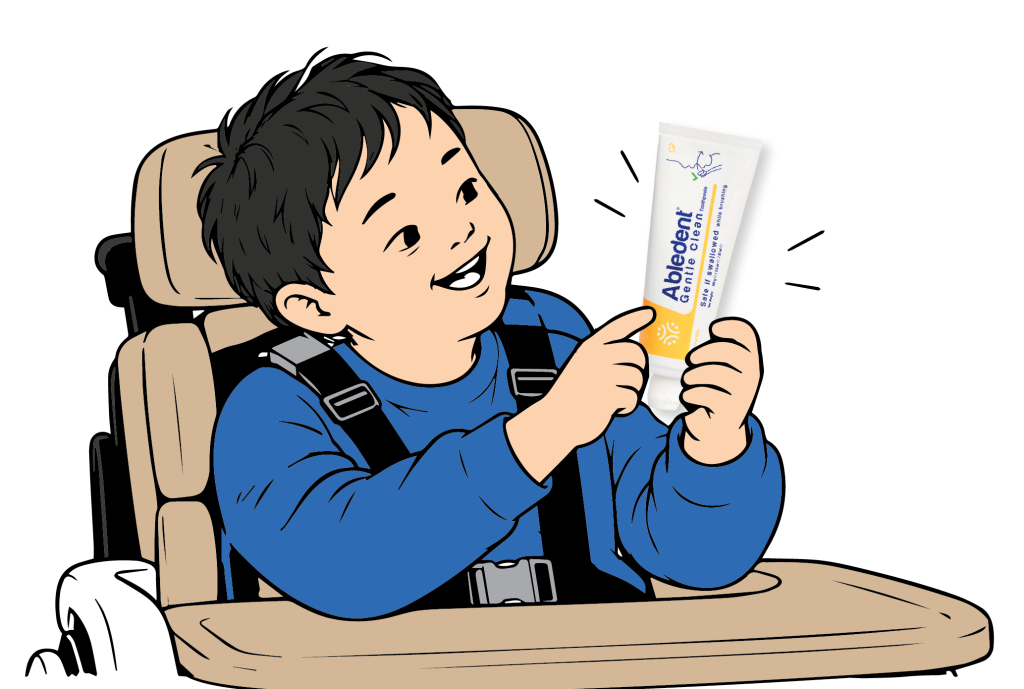
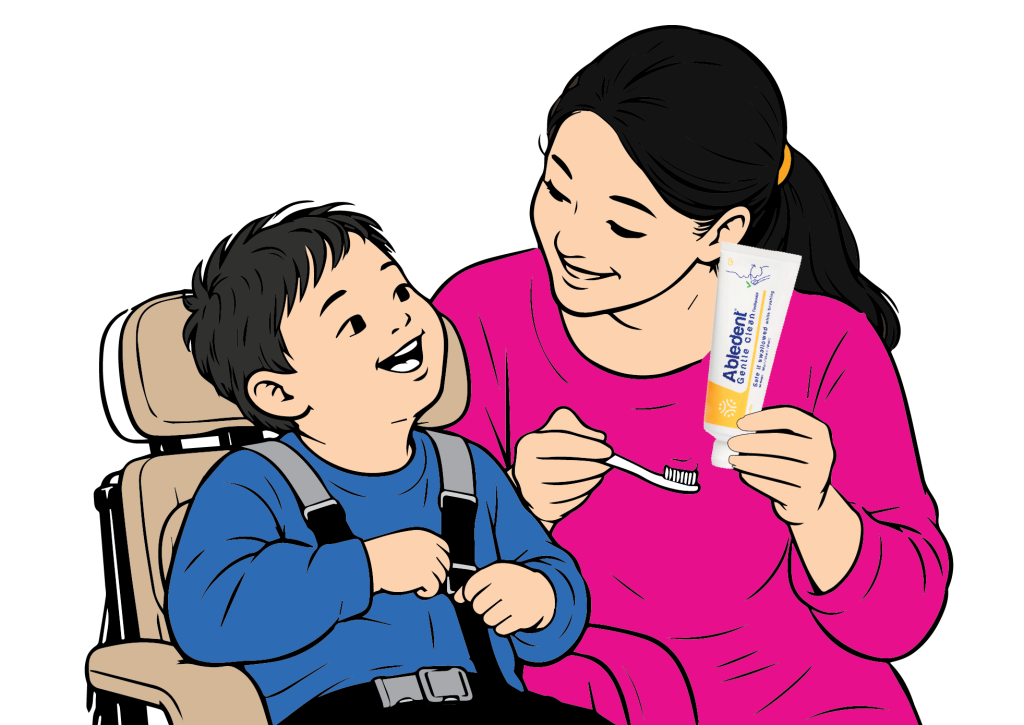
When your child has sensory sensitivities, behavioural challenges, or physical limitations, brushing can feel overwhelming for everyone involved. Abledent creates gentle, swallow-safe oral care that tackles these challenges.

When your child has sensory sensitivities, behavioural challenges, or physical limitations, brushing can feel overwhelming for everyone involved. Abledent creates gentle, swallow-safe oral care that tackles these challenges.

CONSEQUENCES

Why Oral Care Matters for Special Needs Children

01

Unmet Dental Needs

Children with special health care needs are more likely to have unmet dental problems.

02

Oral Care Challenges

When brushing becomes inconsistent because of sensory, behavioural, or physical challenges, cavities and gum disease can develop quickly and go unnoticed for longer.

03

Brushing Resistance

Difficult or distressing brushing experiences can make children resist oral care, making the routine harder for both the child and caregiver.
CHALLENGES

Oral Care Challenges for Special Needs Children

These challenges often come from sensory and physical needs that regular oral care routines were never designed around.

Sensory Triggers

Approximately half of parents of children with special health care needs report that sensory processing difficulties directly interfere with their child’s oral care.

Inability to Spit Safely

Many children with neurological or developmental conditions cannot reliably spit out toothpaste after brushing.

Physical Limitations

For children with motor difficulties, cerebral palsy, or muscular weakness, holding a toothbrush and controlling brushing movements can be physically exhausting.

Resistance to Brushing

When brushing becomes a daily struggle, routines often get shortened, skipped, or avoided altogether. Making the experience gentler and less overwhelming is what helps create consistency in the long run.
SOLUTIONS

What to Look for in Oral Care Products

Remove the triggers. Lower the safety stakes. Make it something you can both get through.

Swallow-safe, fluoride-free toothpaste

Mouthwash category icon

Foam-free, SLS-free formula

Mild, familiar flavour

Easy open cap for assisted use

GET STARTED TODAY

Find Your Community in Oral Care

You are not the only parent who has dreaded toothbrushing time. This is a space where caregivers of children with diverse needs share what actually works, the products, the techniques, the small wins, without judgment.

Common Questions About Oral Care for Special Needs Children

My child cannot spit out toothpaste. Is it dangerous if they swallow it?

With standard fluoride toothpaste, swallowing regularly can be a concern. Abledent Gentle Clean Toothpaste removes that worry. It is made with food-listed ingredients, it’s safe-if-swallowed when used as directed, and requires no rinsing after use.

My child gags or melts down every time we try to brush. Where do I start?

Start by identifying what triggers the response, such as foam, flavour, smell, or pressure, and reduce as many as possible. A foam-free, mild-flavoured toothpaste, like either Abledent toothpaste, used with a soft brush is often the easiest starting point. If brushing still does not work, Abledent Gentle Clean Wipes offer a gentler alternative with far less resistance.
What is the best toothpaste for a child with special needs?

The right toothpaste is the one your child will actually tolerate, so start with what removes the barriers: foam-free, SLS-free, mild in flavour, and safe if swallowed for children who cannot reliably spit. Abledent Gentle Clean Toothpaste covers all four, with a mild vanilla flavour and food-listed ingredients. If your child’s enamel is weak or decay has been a recurring problem, Abledent Calcium Toothpaste adds Calcium Sucrose Phosphate and Xylitol to support remineralisation, and is equally gentle.

How do I brush my child's teeth when they will not open their mouth?

Never force it, as this usually makes the next attempt harder. Try a consistent cue before you start, such as a gentle touch on the shoulder or the same short phrase each time, and approach from the side rather than the front. Keep sessions very short, even a few seconds at a time, and build up gradually. On days when the mouth stays closed, Abledent Gentle Clean Wipes can be used gently on whatever surfaces are accessible. Never place fingers between the teeth, and if you are using a wipe, wrap it well around your finger and work from the side of the mouth.

Can wipes actually replace brushing for my child?

Not as a permanent replacement, but they can help on difficult days. Abledent Gentle Clean Wipes clean teeth and gums without water or rinsing, making them useful when brushing isn’t possible. For longer-term assisted care, Abledent Enamel Care Wipes can also be part of daily oral hygiene.

How often should I brush my child's teeth if a full routine is not possible?

Twice a day is the goal, but consistency matters more than completeness. A short, calm session every day does more for your child’s teeth than an occasional thorough one that ends in distress. On the hardest days, a wipe used gently is still oral care.

My child has cerebral palsy and I do all the brushing. Are there products better suited for assisted care?

Yes. Abledent Gentle Clean Toothpaste is designed for ease of assisted brushing and requires no rinsing or spitting. Oral care wipes can make the process even simpler, allowing caregivers to clean the mouth safely with minimal steps and coordination.

My child is on long-term medication that affects their oral health. Should I be doing anything differently?

Yes. Some medications can cause dry mouth, gum changes, and higher decay risk. A non-foaming, SLS-free toothpaste helps reduce irritation in a more sensitive mouth. For children with enamel weakening, Abledent Calcium Toothpaste provides remineralising support without harsh ingredients or foaming agents. It is also important to keep your dentist informed about all medications.