Oral Care for People with Cerebral Palsy

Oral Care for People with Cerebral Palsy

For someone living with cerebral palsy, oral care involves physical barriers that most products were never built for. Abledent is designed to change that, gently, safely, and practically.

For someone living with cerebral palsy, oral care involves physical barriers that most products were never built for. Abledent is designed to change that, gently, safely, and practically.

CONSEQUENCES

Why Oral Care Matters for People with Cerebral Palsy

Source:
National Library of Medicine – PMC12875176
Springer Nature Link – 10.1186

01

Higher Cavity Risk

More than half of children with cerebral palsy have dental caries, a rate that is directly linked to how difficult consistent oral care is to maintain.

02

Severe Gum Problems

Gingival bleeding affects the vast majority of people with cerebral palsy, and without daily oral care, gum problems are more common and often more severe.

03

Accelerated Tooth Decay

Drooling and gastric reflux create an environment where teeth erode and decay faster than they would in most people.

04

Respiratory Infection Risk

For people with cerebral palsy, bacteria from an unclean mouth can be aspirated into the lungs during swallowing, making poor oral hygiene a direct respiratory risk rather than just a dental one.
CHALLENGES

The Real Challenges Behind Brushing With Cerebral Palsy

Regular oral care routines are built for people without these physical and neurological barriers, which is why they often do not work here.

Difficulty Holding & Controlling a Toothbrush

Muscle stiffness and limited hand control can make brushing difficult, even when someone is trying their best.

Cannot Spit or Rinse Reliably

Oromotor dysfunction, affecting the muscles of the mouth and throat, makes spitting and rinsing harder than most people realise.

Assisted Brushing Can Be Difficult

Involuntary movements, jaw clenching, or spasms can make oral care more challenging for caregivers.

Medication-Related Gum Problems

Some seizure medications can cause the gums to swell or become more sensitive, making daily oral care harder over time.
SOLUTIONS

What to Look for in Oral Care Products for Cerebral Palsy

Fewer steps, safer ingredients, and formats that work around the challenges, not against them.

Safe-if-swallowed & No-Rinse Formulas

Mouthwash category icon

Foam-Free Formulas

Wipes for When Brushing Is Not Possible

Remineralising Ingredients

GET STARTED TODAY

Find Your Community in Oral Care

From difficult brushing days to everyday routines, this is a space where caregivers and individuals with cerebral palsy can share support, advice, and experiences that feel understood.

Common Questions About Oral Care for Cerebral Palsy

How do you brush the teeth of someone with cerebral palsy who resists or clenches their jaw?

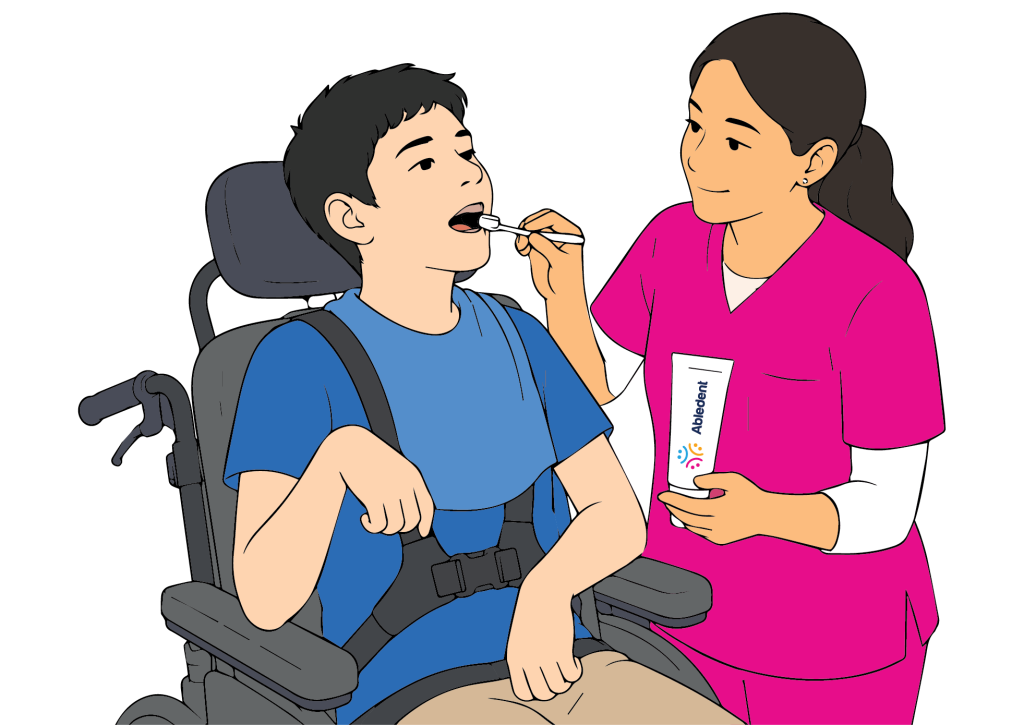
Never force it; this can cause distress and make future attempts harder. Try approaching from the side rather than the front, using a calm and consistent routine at the same time each day. A soft brush with a mild, familiar flavour reduces sensory triggers. On days when jaw clenching makes brushing impossible, Abledent Gentle Clean Wipes can be used gently around accessible tooth surfaces. Never place fingers between the teeth. If using a wipe, wrap it well around your finger and work from the side of the mouth.

What is the easiest way to clean teeth when someone cannot hold a toothbrush?

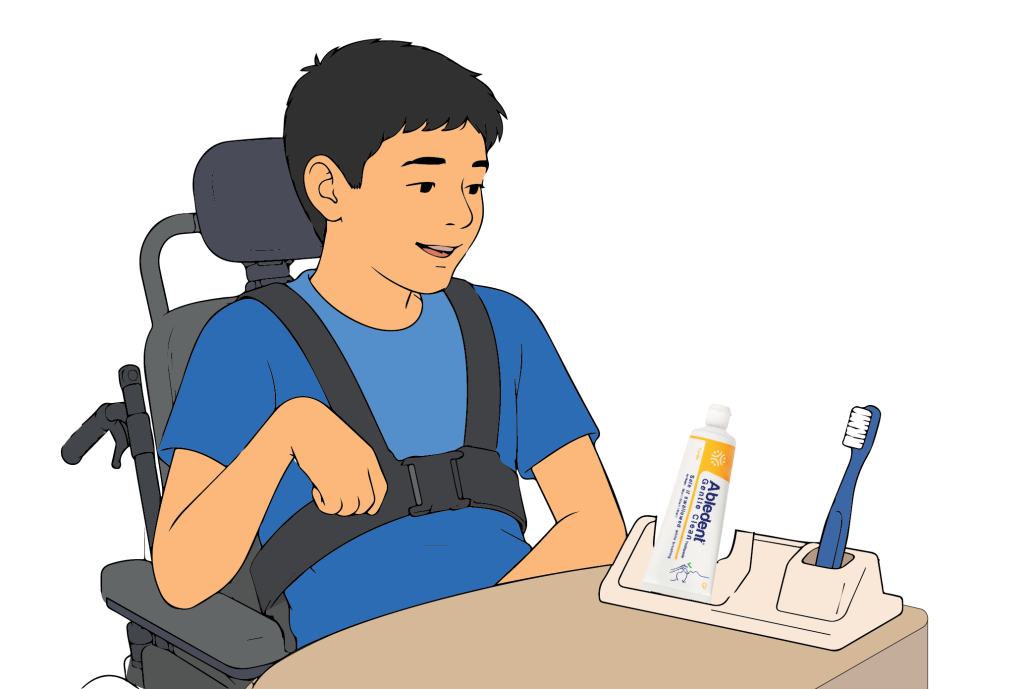
When independent brushing is not possible, assisted care with a soft brush or an oral care wipe is the most practical route. Abledent Gentle Clean Wipes require no grip, no water, and no rinsing, and are among the most caregiver-friendly formats available. For someone who can tolerate some assisted brushing, Abledent Gentle Clean Toothpaste removes the need to spit or rinse, keeping the routine safe even when control is limited.

My child drools a lot. Does that affect their teeth?

Yes, persistent drooling keeps the area around the mouth and lips constantly moist, which can cause irritation, and the oral environment can become more prone to bacterial buildup. Combined with the difficulty of consistent brushing, this increases the risk of decay and gum problems. A consistent, gentle daily oral care routine, using products that are easy to administer, makes a meaningful difference over time.
Can oral care wipes be used as an alternative to brushing?

For many people with cerebral palsy, wipes are the most realistic daily option available. Abledent Gentle Clean Wipes need no water, no rinsing, and minimal cooperation from the patient beyond keeping the mouth accessible. If additional enamel protection is needed, Abledent Enamel Care Wipes can help remove plaque and food debris while providing fluoride-rich enamel support.

What is the best toothpaste for someone with cerebral palsy?

The right toothpaste depends on the person’s ability to spit and rinse. For those who cannot reliably do so, a non-foaming, gentle toothpaste like Abledent Gentle Clean Toothpaste is often the better choice. If they are able to spit and rinse comfortably, Abledent Calcium Toothpaste is a great option. Formulated with Calcium Sucrose Phosphate and Xylitol, it helps remineralise weakened enamel, strengthen teeth, and support long-term oral health.