Oral Care for Adults with Dementia & Alzheimer’s

Oral Care for Adults with Dementia & Alzheimer’s

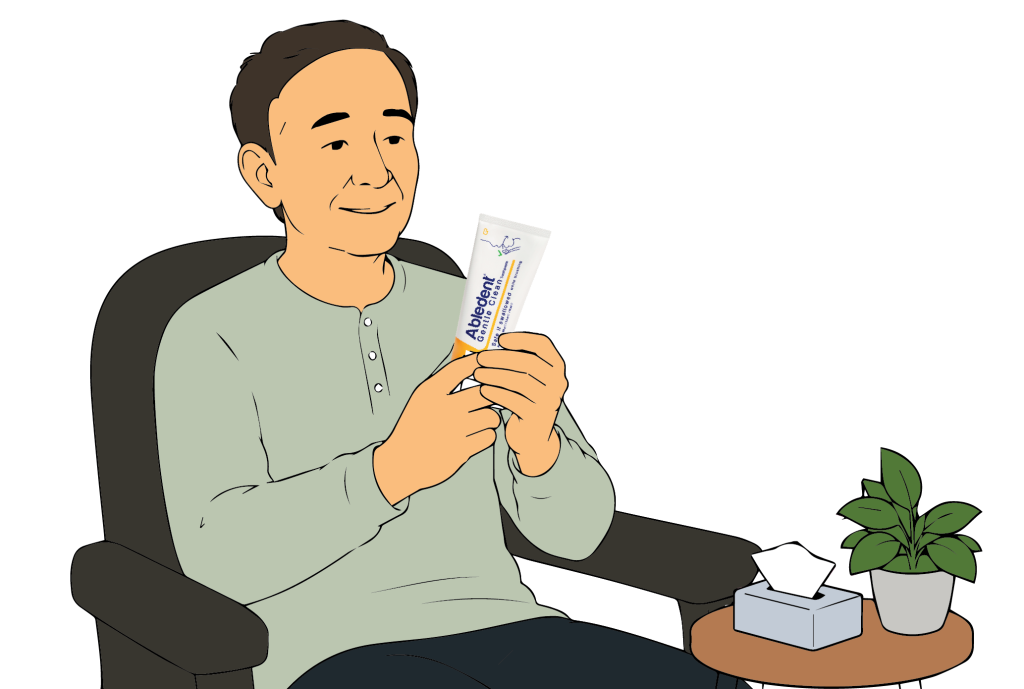
Memory loss can slowly change the way everyday oral care routines are understood and practised. Abledent is here to make that daily task a little less difficult, a little less distressing, and a lot more manageable.

Memory loss can slowly change the way everyday oral care routines are understood and practised. Abledent is here to make that daily task a little less difficult, a little less distressing, and a lot more manageable.

CONSEQUENCES

Why the Mouth Is One of the First Things to Suffer in Dementia

01

Overlooked Oral Health

Up to 96% of people living with dementia experience oral health problems, yet oral care is often overlooked as the condition progresses.

02

Cognitive Decline Link

Research has linked faster cognitive decline and gum disease, making oral care even more important over time.

03

Infection Risk

When brushing and rinsing become difficult to manage consistently, harmful bacteria can build up in the mouth and increase the risk of serious infections, including respiratory illness.

04

Unnoticed Oral Pain

Tooth pain and oral infections often go unnoticed in dementia patients because they may no longer be able to communicate discomfort clearly, which is exactly why preventive daily oral care matters more than ever.
CHALLENGES

Why Brushing Can Feel Distressing for People with Dementia or Alzheimer’s

Resistance, confusion, and fear can make even simple oral care feel overwhelming for people with dementia and Alzheimer’s. Here are some common challenges they face

They No Longer Recognise the Routine

As dementia progresses, familiar routines like brushing can start to feel confusing or unfamiliar, often requiring more reassurance, patience, and support.

Resistance & Refusal

As Alzheimer’s advances, patients show significantly higher rates of refusing oral health care and are increasingly unable to rinse or gargle independently.

Cannot Spit or Rinse Safely

Later stages of dementia can affect the ability to spit or rinse reliably. Using conventional toothpaste and mouthwash may no longer be safe or suitable at this stage.

Pain That Goes Unspoken

Many individuals with dementia struggle to communicate signs of oral pain or discomfort, meaning tooth decay, gum disease, and mouth sores can go undetected for far too long.
SOLUTIONS

What to Look for in Oral Care Products for Dementia Patients

Simpler products, fewer steps, and gentler formulas can make the biggest difference for both caregivers and patients.

Safe-if-swallowed & No-Rinse Formulas

Mouthwash category icon

Remineralising & Enamel-Strengthening Formulas

Mild, Familiar Flavours

Wipes for Difficult Days

GET STARTED TODAY

Find Your Community in Oral Care

Caring for someone with dementia is one of the most selfless things a person can do, and often one of the loneliest. This is a space where caregivers and families can share what helps, feel supported, and connect with others who truly understand the experience.

Questions Caregivers of Dementia or Alzheimer’s Patients Ask Most

My loved one refuses to let me brush their teeth. What can I actually do?

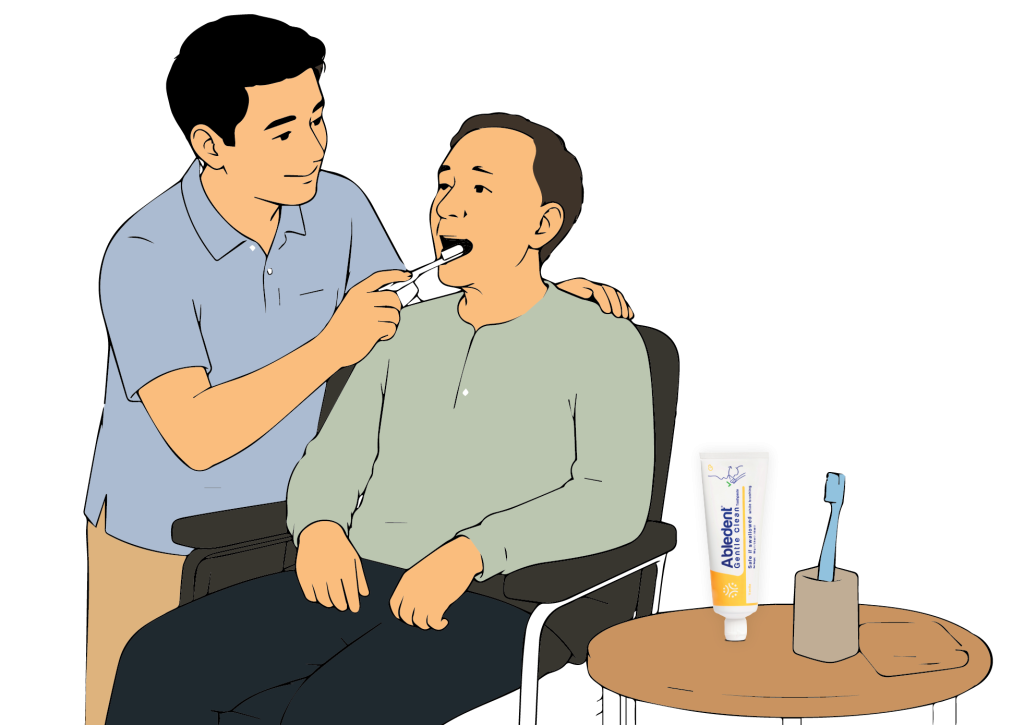
Resistance during brushing is extremely common and rarely about the brushing itself, it is usually fear, confusion, or discomfort. Try changing the time of day, reducing noise and distraction, and using a familiar voice. Demonstrating brushing yourself can sometimes prompt them to follow along. On days when cooperation simply is not there, an oral care wipe used gently is far better than a battle that leaves both of you distressed.

Is it safe to use regular toothpaste for someone in the later stages of Alzheimer's?

As Alzheimer’s progresses, the ability to spit or rinse reliably decreases, which can make regular fluoride toothpaste unsuitable for daily use. Abledent Gentle Clean Toothpaste is made specifically for this stage of care. It is SLS-free, fluoride-free, and safe-if-swallowed, so the routine can continue in a safe and simple manner.

My family member with Alzheimer's has started refusing to open their mouth at all. What can I do?

This is more common than most caregivers are told. In Alzheimer’s, the mouth can feel like an unfamiliar and threatening space. Try using a consistent cue before starting, like a gentle touch on the shoulder, and keep the approach slow and predictable. If the mouth stays shut, Abledent Gentle Clean Wipes can be used on accessible surfaces around the gum line without any forcing, water, or rinsing needed.

What is the best toothpaste for someone with dementia?

The priority should be safety and tolerability above all else. Look for a toothpaste that is swallow-safe, foam-free, and mild in flavour, so that even if the patient cannot fully cooperate, using it does not create additional discomfort. Abledent Gentle Clean Toothpaste is formulated specifically for assisted daily care, with a gentle vanilla flavour, food-listed ingredients, and no SLS or fluoride.

Can oral wipes replace brushing for dementia patients?

When brushing is no longer consistently possible, oral care wipes are an effective alternative. Abledent Enamel Care Wipes are particularly well suited for long-term daily use, offering fluoride-rich cavity protection without any brushing, water, or rinsing required.