Oral Care for ICU & Hospitalised Patients

Oral Care for ICU & Hospitalised Patients

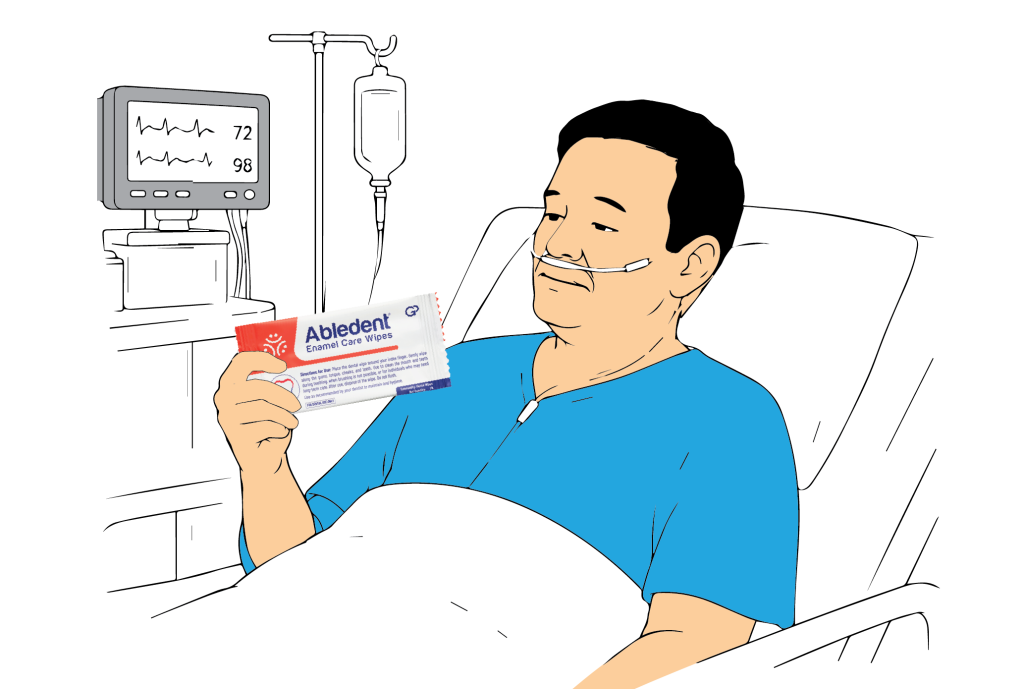
When someone is fighting to recover, oral hygiene is rarely the first thing on anyone’s mind. But it shouldn’t be neglected either. In such cases, Abledent makes it easier to maintain consistent oral hygiene, even when regular brushing is not an option.

When someone is fighting to recover, oral hygiene is rarely the first thing on anyone’s mind. But it shouldn’t be neglected either. In such cases, Abledent makes it easier to maintain consistent oral hygiene, even when regular brushing is not an option.

CONSEQUENCES

Why Oral Care Is a Clinical Priority in Hospital Settings

Source:
National Library of Medicine – 16435104

01

Rapid Bacterial Buildup

When someone is in the ICU, their mouth is one of the fastest places for harmful bacteria to build up, and one of the most overlooked.

02

Reduced Pneumonia Risk

Regular oral care has been shown to cut the incidence of ventilator-associated pneumonia (VAP) in ICU patients by more than half.

03

Delayed Recovery

Poor oral hygiene can delay recovery by increasing discomfort, reducing oral intake, and adding extra strain on a body already working to recover.

04

Overlooked Oral Discomfort

Dry mouth, mouth sores, and oral pain are some of the most common yet overlooked discomforts during hospitalisation, often affecting a patient’s ability to eat, rest, and feel comfortable.
CHALLENGES

Why Standard Oral Care Products Do Not Work in Hospital Settings

Hospital recovery can make regular brushing routines hard to follow, especially when patients are weak, sedated, or unable to rinse.

Cannot Spit, Rinse, or Sit Upright

Most patients in hospitals are lying flat, sedated, or too weak to manage any part of a conventional brushing routine. A product that requires rinsing or spitting is simply not safe to use at the bedside.

Regular Toothpaste Isn’t Suitable for ICU Care

ICU patients face a high risk of oral bacteria build-up. Thus, bedside oral care often needs a combination of oral care products to be effective.

Caregivers Need Faster, Safer Formats

Nurses and caregivers managing multiple patients need oral care products that are fast, effective, and require no water or equipment and minimal patient cooperation. Every unnecessary step is a barrier to consistent daily care.
SOLUTIONS

What to Look for in Oral Care Products for Hospital & ICU Settings

The right products should make consistent oral care possible even in the most critical settings.

No-Rinse & Swallow-Safe Formats

Mouthwash category icon

Antibacterial Action

Wipes for Ventilated & Immobile Patients

GET STARTED TODAY

Find Your Community in Oral Care

Whether you are a nurse searching for better bedside oral care solutions or a family member supporting someone through hospitalisation, this is a space where experiences can be shared, questions can be asked, and support feels easier to find.

Questions About Oral Care in ICU & Hospital Settings

How do you clean the mouth of a patient who is on a ventilator?

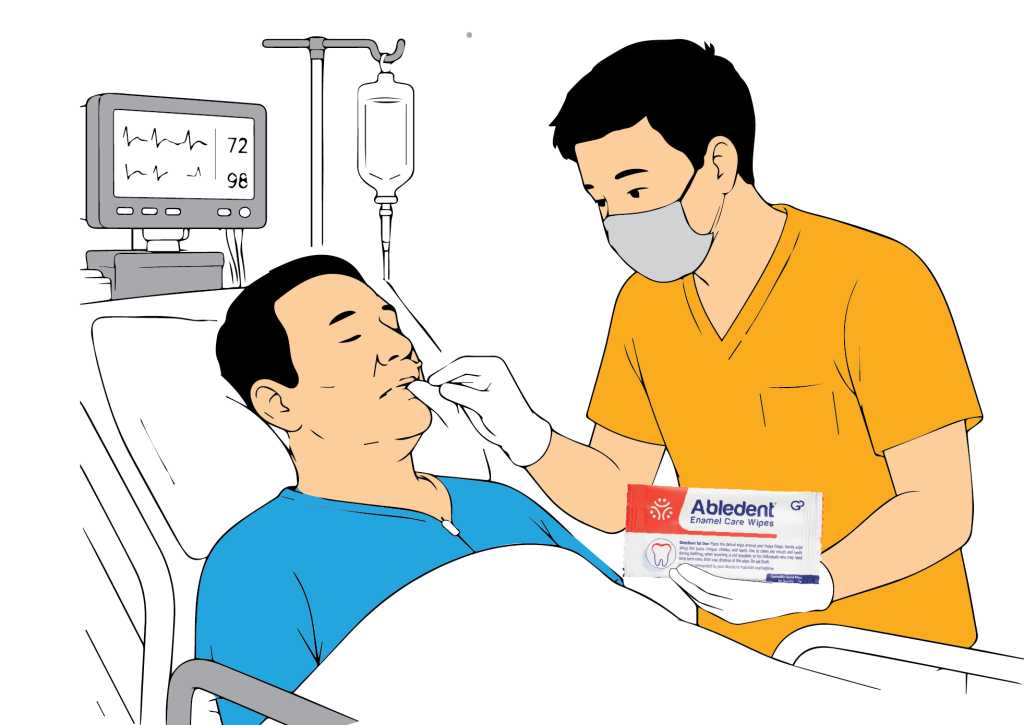
Ventilated patients need assisted oral care that doesn’t rely on rinsing or spitting. In most cases, disposable oral care wipes are used to gently clean the teeth, gums, and tongue. Abledent Active Clean Wipes with Chlorhexidine are an effective option when people on the ventilator.

How often should oral care be carried out for ICU patients?

At least twice daily, but for ventilated or high-risk patients, more frequent care is clinically recommended. The risk of developing ventilator-associated pneumonia increases with every day of intubation, making daily oral care one of the simplest things a caregiver can do to help reduce complications during a long hospital stay.

Is it safe to use toothpaste on a hospitalised patient who cannot spit?

No, standard toothpastes, especially those containing fluoride or foaming agents, are not designed to be swallowed, so they are not safe for hospitalised patients who cannot spit. Abledent Gentle Clean Toothpaste is made with safe if swallowed ingredients and requires no rinsing, which is a much safer option for patients who can still tolerate some assisted brushing.
What is the difference between Abledent Gentle Clean Wipes and Active Clean Wipes for hospital use?

Abledent Gentle Clean Wipes are a gentler option, ideal for general daily assisted care, patients with mouth sores, or those with oral sensitivity. Abledent Active Clean Wipes contain Chlorhexidine Gluconate and are typically used when a higher level of oral care support is required, including for ventilated patients.

Can family members help with oral care when a loved one is hospitalised?

Absolutely, and in many cases, a familiar face makes the process easier for the patient. Simple assisted oral care using a soft wipe requires no training and no equipment. Abledent’s Wipes are designed for exactly this. If you are unsure, always check with the nursing team first on what is appropriate for your loved one’s specific condition.