Oral Care in Palliative Care
Oral Care in Palliative Care
In palliative care, oral comfort can deeply affect how someone eats, speaks, and feels day to day. Abledent’s gentle, easy-to-use oral care products help make that care safer, simpler, and more comfortable to provide.
In palliative care, oral comfort can deeply affect how someone eats, speaks, and feels day to day. Abledent’s gentle, easy-to-use oral care products help make that care safer, simpler, and more comfortable to provide.

Why Oral Care Cannot Be Overlooked in Palliative Care
Source:
National Library of Medicine – 39172259
National Library of Medicine – PMC6989644
01
Unnoticed Oral Pain
02
Dry Mouth
03
Oral Fungal Infections
04
Comfort & Connection
Oral Health Challenges in Palliative Care Patients
Palliative care changes what oral care needs to look like, and most standard products were never designed for that.
Dry Mouth

Mouth Sores and Sensitivity

Swallowing Difficulties
Full Dependence on Caregivers
What to Look for in Oral Care Products
In palliative care, the standard for oral care products is different. Comfort and safety come first. Everything else follows.

Swallow-safe, no-rinse toothpaste

Foam-free, SLS-free formula

Alcohol-free formulas
Recommended Abledent Products
Abledent Active Clean Wipes
Abledent Gentle Clean Wipes
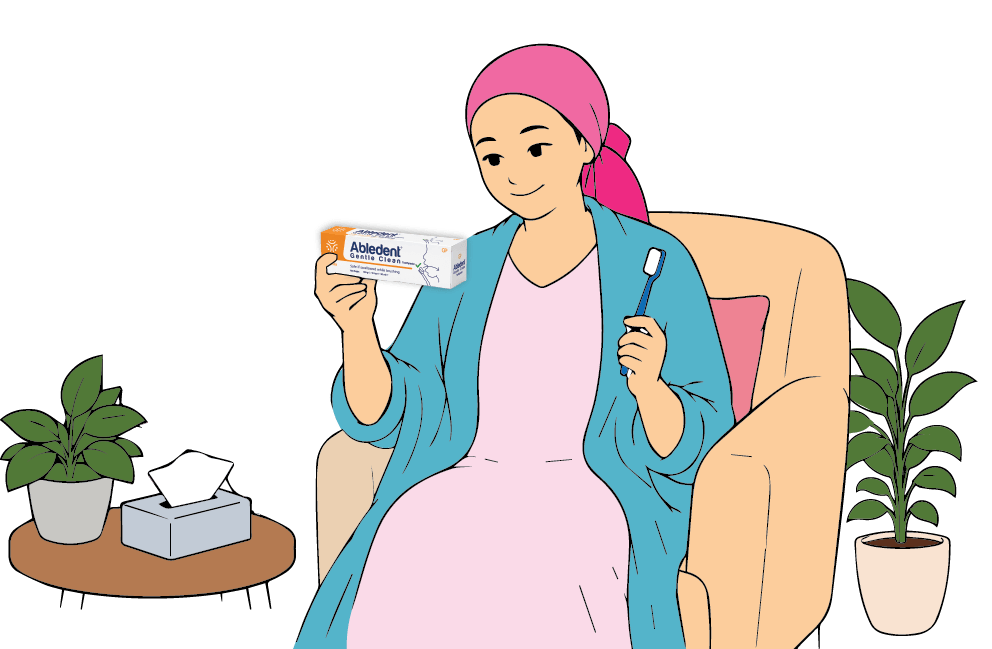
Abledent Gentle Clean Toothpaste
Disclaimer: Consult your dentist or palliative care team before introducing new oral care products.
Find Your Community in Oral Care
Caring for someone in palliative care means focusing on comfort, dignity, and the small daily things that matter. This is a space where caregivers can share what helps, ask questions, and connect with people who understand the experience.
Common Questions About Oral Care in Palliative Care
Anything requiring reliable rinsing and spitting is a risk when swallowing is compromised. Abledent Gentle Clean Toothpaste is safe even if swallowed when used as directed. It is made with food-listed ingredients, contains no fluoride, no SLS and requires no rinsing. For days when even that isn’t manageable, Abledent Gentle Clean Wipes clean teeth and gums gently with nothing to rinse out afterward.
Yes, and it’s important to keep doing so even when it’s uncomfortable. Switch to the gentlest option available: a soft wipe rather than a brush, a non-foaming toothpaste with no harsh ingredients, and very short, gentle sessions. Abledent Gentle Clean Wipes are a gentle solution when the mouth is sore, as they require no pressure and no rinsing.
For patients with severe conditions such as oral infections, mucositis, dehydration, or immunosuppression, mouth care may be required more frequently than the conventional twice a day. For most palliative patients, gentle cleaning after every meal and before sleep is a meaningful baseline. When brushing isn’t possible, a wipe used consistently is far better than nothing.
It does — perhaps more than ever. An unresponsive person cannot communicate oral discomfort, cannot clear bacteria from their mouth, and is entirely dependent on caregivers to prevent infection and maintain comfort. Abledent Gentle Clean and Active Clean Wipes require minimal cooperation and can be used gently while the person is lying down, making them the most practical option for this stage of care.
Yes, and often it matters more than at any other point. In the last days and weeks, the mouth commonly becomes very dry, particularly when someone is breathing through their mouth, taking little by way of fluids, or on medications that reduce saliva. Keeping the mouth clean and moist is one of the few things that improves comfort at this stage, even when the person cannot tell you they are uncomfortable. Keep it simple and very gentle: a soft wipe used briefly on the teeth, gums, and tongue, with no rinsing, no pressure, and no need to complete a full routine. Abledent Gentle Clean Wipes are designed for exactly this kind of care. If the mouth looks sore, coated, or has white patches, tell the palliative care team, as that may need treatment rather than cleaning.