Oral Care During Chemotherapy

Oral Care During Chemotherapy

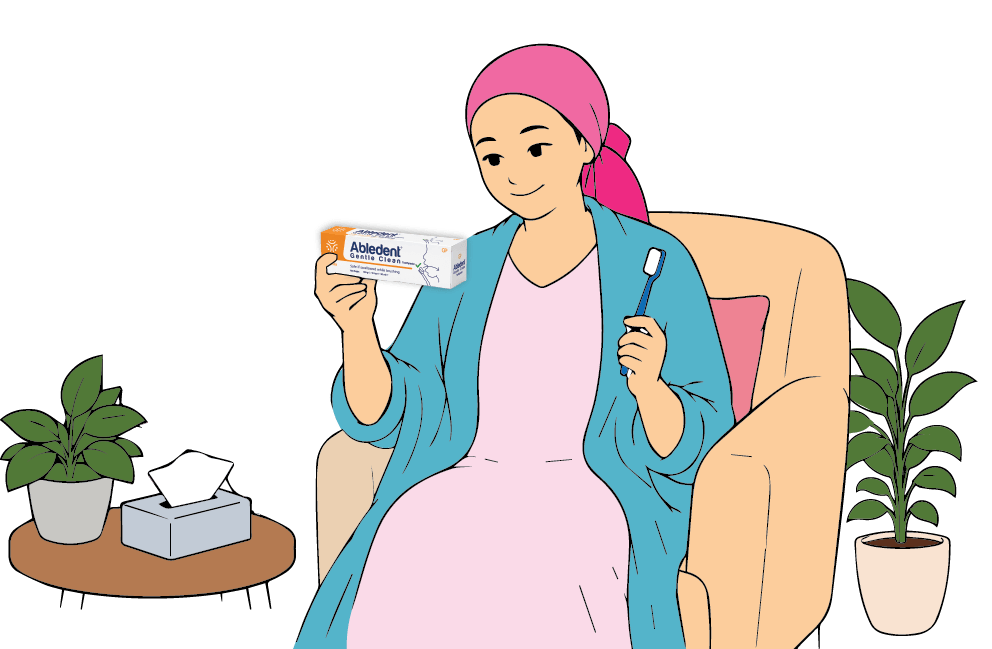
Cancer treatment can make even basic oral care feel exhausting. Abledent’s products are designed for moments when brushing hurts, toothpaste burns, or you need assisted care.

Cancer treatment can make even basic oral care feel exhausting. Abledent’s products are designed for moments when brushing hurts, toothpaste burns, or you need assisted care.
CONSEQUENCES

Why the Mouth Needs Extra Attention During Cancer Treatment

Source:
National Library of Medicine – PMC7542970

01

Oral Mucositis

Nearly 40% of patients on standard chemotherapy experience oral mucositis, a painful inflammation and sores inside the mouth. With high-dose chemotherapy, that number can rise to 75–90%.

02

Increased Risk of Infection

A damaged mouth lining and weakened immunity during chemotherapy can allow bacterial, fungal, and viral infections to take hold.

03

Reduced Saliva

Chemotherapy can significantly reduce saliva production, weakening the mouth’s natural defence against decay and infection at a time when the body is already vulnerable.

04

Impact On Recovery

Oral pain and discomfort during cancer treatment are not just a dental concern, they affect the ability to eat, speak, sleep, and maintain the nutrition the body needs to recover.
CHALLENGES

Why Oral Care Can Feel Unbearable During Treatment

Chemotherapy changes the mouth in ways that make regular oral care products unsuitable, and sometimes harmful.

Mouth Sores & Ulcers Make Brushing Painful

Strong flavours and foaming toothpaste can irritate inflamed tissues and mouth ulcers, making brushing something to dread.

Cannot Spit or Rinse Reliably

Fatigue, nausea, and weakness can make rinsing difficult during treatment. Accidentally swallowing regular toothpaste or mouthwash may become a concern.

Dry Mouth Accelerates Decay

Chemotherapy reduces saliva production, making the mouth more vulnerable to decay and infection.

Extreme Fatigue Makes Brushing Difficult

Daily oral care can become difficult to keep up with when fatigue leaves the body physically exhausted.
SOLUTIONS

What to Look for in Oral Care Products During Chemotherapy

The right products work with the body during treatment, not against it.

Swallow-Safe & No-Rinse Formulas

Mouthwash category icon

Foam-Free & Ultra-Gentle Formulas

Wipes for Assisted Care

GET STARTED TODAY

Find Your Community in Oral Care

Cancer treatment comes with struggles that often go unseen. Connect with people who understand what daily life during treatment really feels like.

Questions People Undergoing Chemotherapy and their Caregivers Often Ask

Why does my mouth hurt so much during chemotherapy?

Chemotherapy affects fast-dividing cells throughout the body, including the delicate lining of the mouth. This can lead to inflammation, ulcers, and extreme sensitivity known as oral mucositis. Since even regular brushing can feel painful, using ultra-gentle, foam-free oral care products and soft wipes can help make daily care more manageable.

Is it safe to use regular toothpaste if I cannot spit properly during treatment?

No, most regular toothpastes are not designed to be swallowed, especially those containing fluoride and SLS. During chemotherapy, when nausea, fatigue, or mouth pain make rinsing and spitting difficult, a swallow-safe toothpaste can be a safer and more comfortable option. Abledent Gentle Clean Toothpaste is specially formulated for this purpose — SLS-free, fluoride-free, and safe if swallowed.

What can I use on days when brushing is too painful, or I am too exhausted?

On days when brushing is simply not possible, Abledent Gentle Clean Wipes are an effective alternative. They fight germs with Xylitol; working without the need for brushing.

How do I protect my teeth from decay when my mouth is constantly dry?

Dry mouth during chemotherapy is extremely common and can significantly increase the risk of rapid tooth decay. Using a toothpaste with remineralising ingredients like Calcium Sucrose Phosphate and Xylitol can help protect and strengthen enamel when saliva production is reduced. Abledent Calcium Toothpaste is specially formulated for this and is gentle enough for long-term daily use.

How can a caregiver help with oral hygiene during cancer treatment?

Keep oral care short, gentle, and low-effort. A swallow-safe toothpaste or soft oral care wipe can make the routine more manageable during treatment. Even a brief daily clean is far better than skipping oral care altogether.